About Korean kimchi
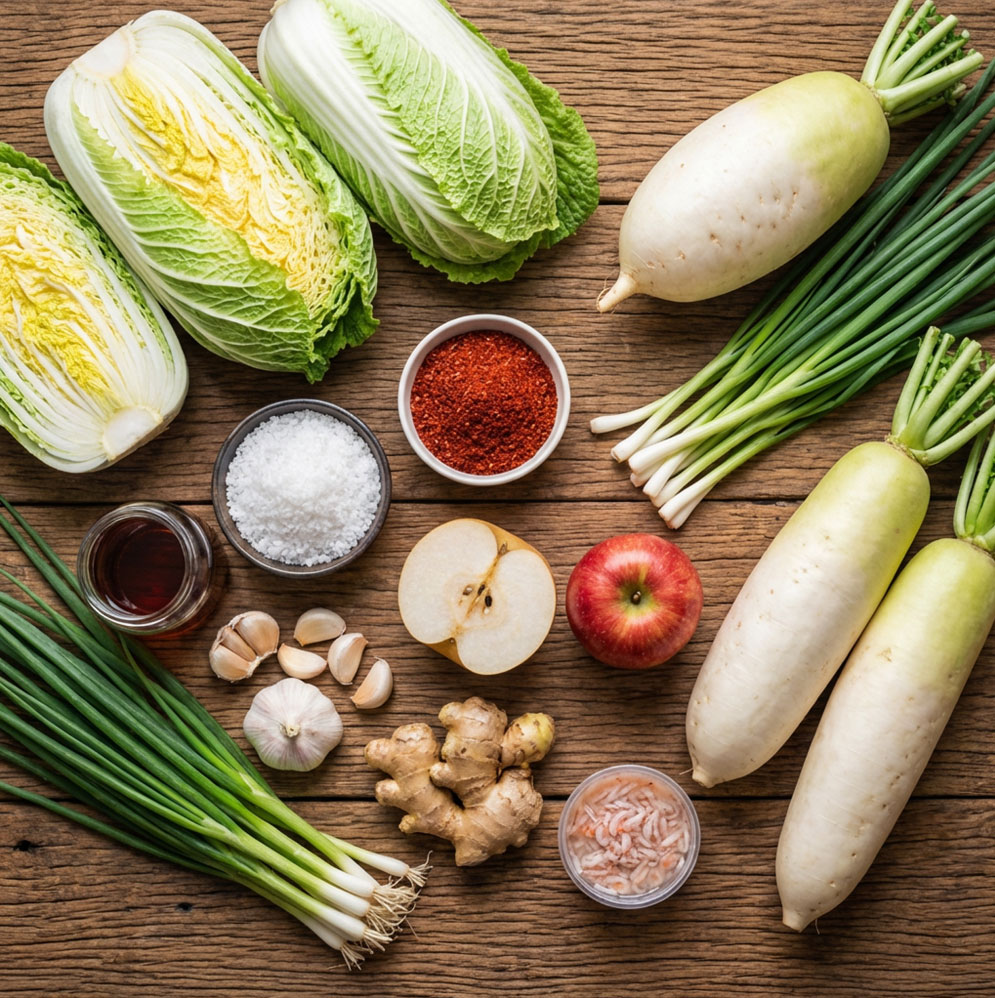
Ingredients for kimchi:
Korean kimchi is made with a carefully balanced mix of fresh vegetables and traditional seasonings that give it its bold, unmistakable flavor. The base for kimchi is napa cabbage, combined with radish, spring onions, onion, garlic, and ginger for depth and freshness.
Fruit such as apple and pear adds a subtle natural sweetness, while Korean chili flakes (gochugaru) bring warmth and color.
Fish sauce and a small amount of fermented seafood add savory richness, and rice flour helps bind the seasoning paste. Seaweed and coarse non-iodized sea salt support proper fermentation, allowing all the ingredients to slowly come together and develop kimchi’s signature tangy, complex taste.
Kimchi as probiotic and prebiotic food
Probiotic, prebiotic and synbiotic food
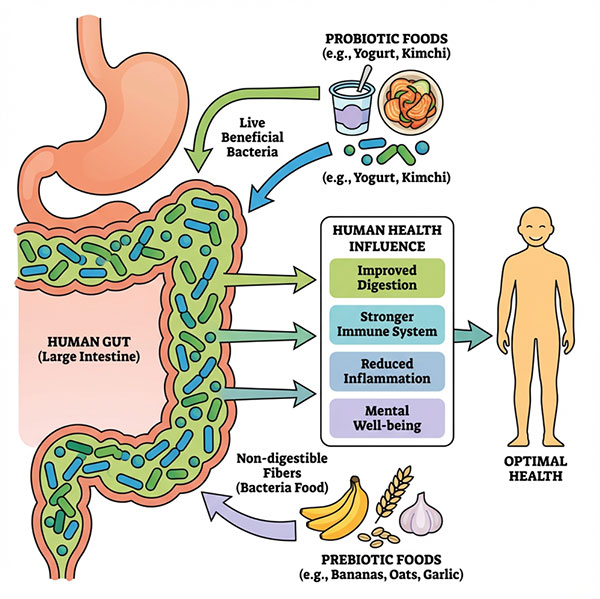
Kimchi is often recognized as a natural probiotic food thanks to its fermentation process, which encourages the growth of beneficial lactic acid bacteria. These live microorganisms help support gut health by contributing to a balanced intestinal microbiome, which is essential for digestion, nutrient absorption, and immune support. When kimchi is unpasteurized, it can provide a rich variety of active cultures at the time it is eaten.
Beyond its probiotic qualities, kimchi also acts as a prebiotic food. Ingredients such as cabbage, radish, garlic, onion, and spring onion are naturally high in dietary fiber and plant compounds that serve as nourishment for beneficial gut bacteria. These prebiotic elements help maintain and strengthen existing microbial populations in the digestive system.
Because kimchi delivers both live beneficial bacteria and the nutrients that help them grow, it is often described as a synbiotic food. This dual function supports digestive health more effectively than probiotics or prebiotics alone. Including kimchi regularly in a balanced diet may promote better digestion, gut balance, and overall well-being, while also adding depth and character to meals. More - Kimchi as probiotic food>>